
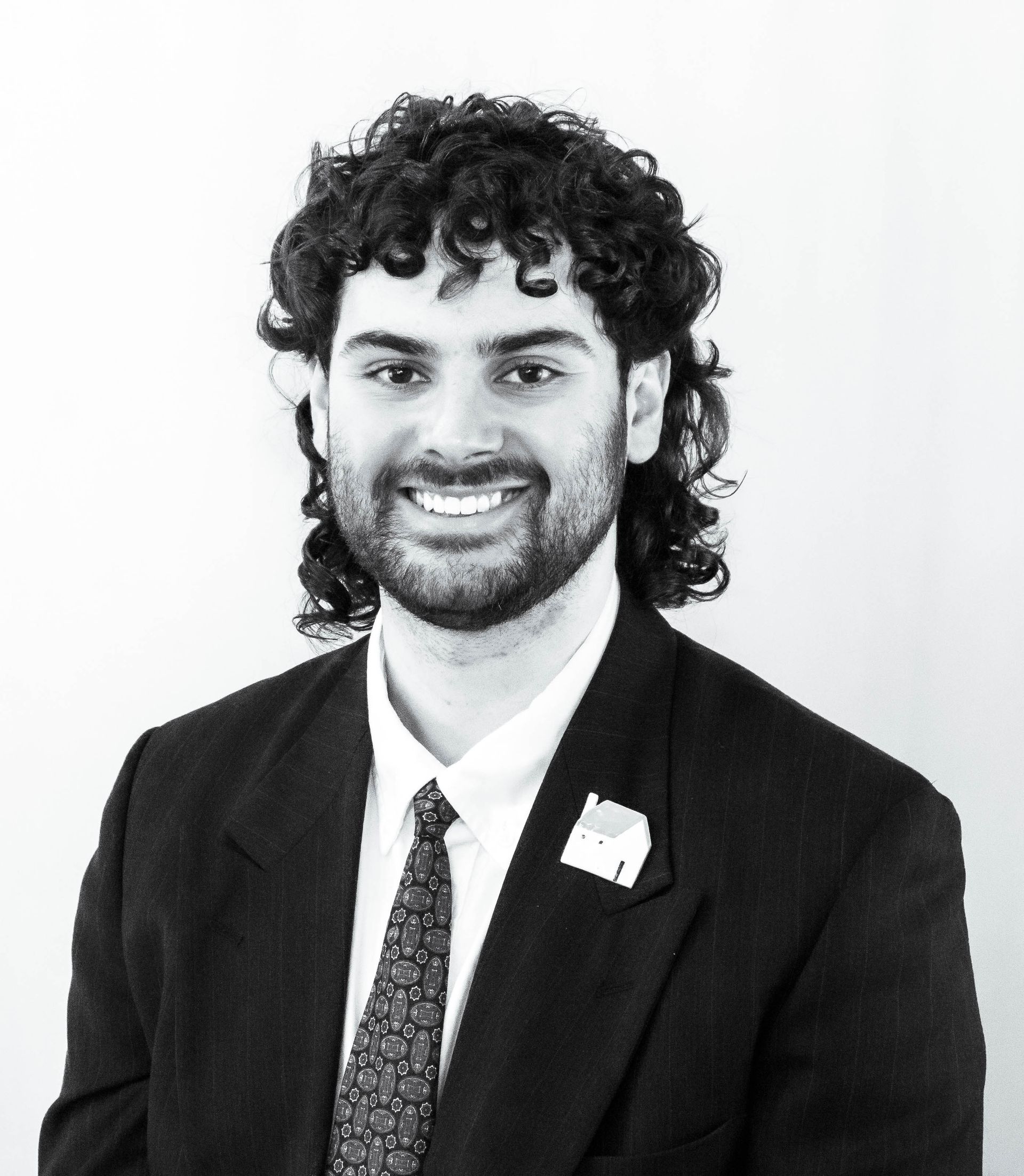
Jackson Voorby
During and after completing his Bachelors in Design (Architecture) with distinction from the University of Newcastle in 2023, Jackson collaborated on creative projects with industry experts. Including the production of drawings for Banquet (2022) with Professor Michael Chapman and Dr. Timothy Burke. Jackson also participated in two significant projects involving Mparntwe (Alice Springs). Firstly, volunteering with Health Habitat’s Housing for Health as a data collector and in an ongoing collaboration with Dr. Chris Tucker. Producing drawings which illustrate the values of community living in Mparntwe. A love for drawing, storytelling and place motivates much of Jackson’s work.

Jackson Voorby

PROJECT OVERVIEW
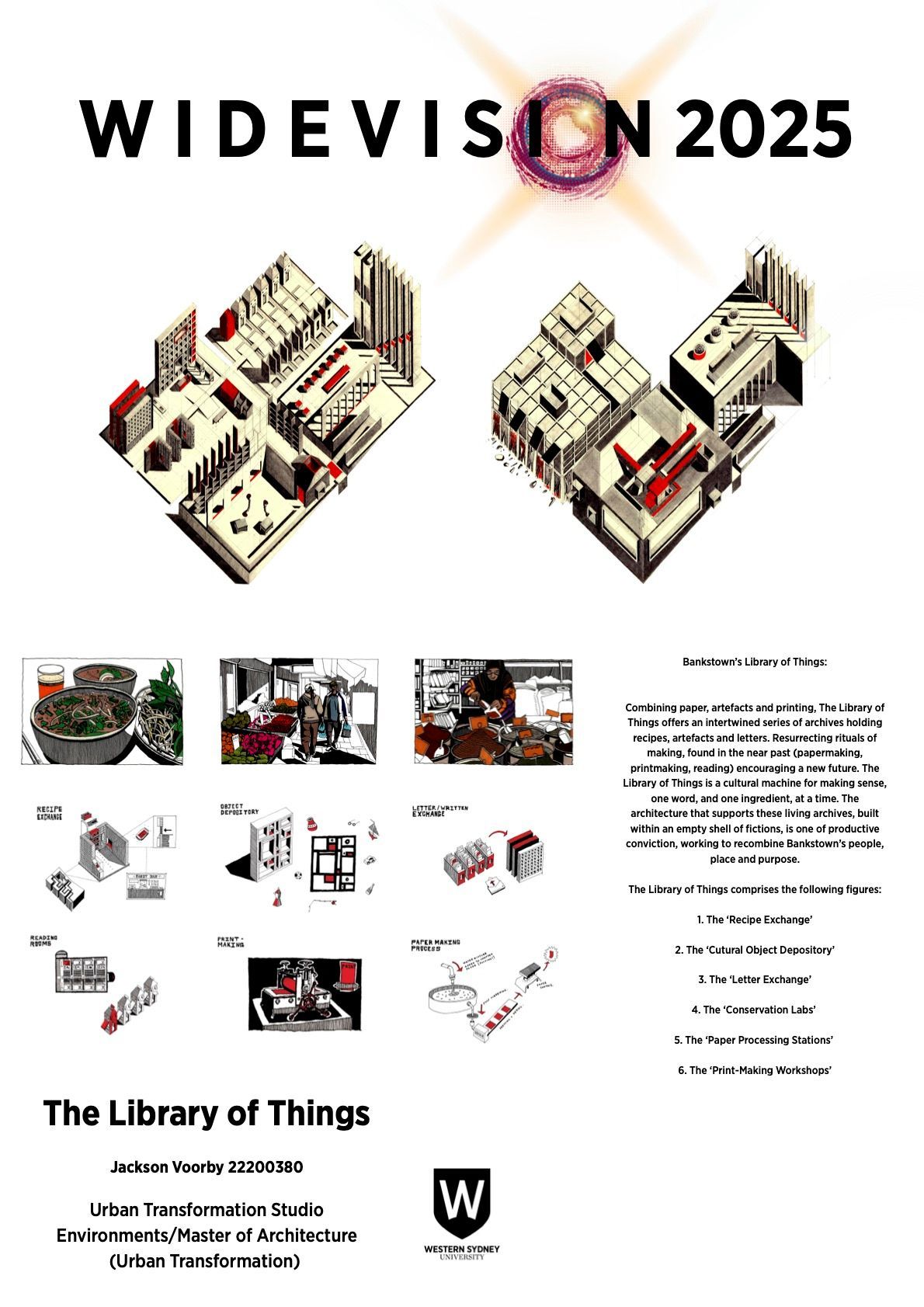


300 Word Project Pitch (Wide Vision): Combining paper, artefacts and printing, The Library of Things offers an intertwined series of archives holding recipes, artefacts and letters. Resurrecting rituals of making, found in the near past (papermaking, printmaking, reading) encouraging a new future. The Library of Things is a cultural machine for making sense, one word, and one ingredient, at a time. The architecture that supports these living archives, built within an empty shell of fictions, is one of productive conviction, working to recombine place, people and an urban purpose. The Library of Things comprises the following figures: 1. The ‘Recipe Exchange is a carousel of sorts, whereby the user accesses their desired store and the recipes within. Simply acquire your ticket from a clerk and enter it into the database to attain the correct recipes. 2. Inspired by Orhan Pamuk’s Museum of Innocence, an ‘Object Depository’ is dedicated to the complex. Curated by the public of Bankstown, with the autonomy to donate objects that they see value in, the system is created with interchangeable volumes to store culturally valuable objects of varying scales and material qualities. 3. A smaller format, ‘Letter Exchange’ for written correspondence is made available for public use. Components for the exchange are supported by operable reading rooms that are arranged for introspection. 4. ‘Conservation Labs’ which are made available as a service to the public, assist in restoring damaged recipes, precious correspondence and artefacts for posterity. If the material has perished, the option to discard the material is offered to the custodian. In this situation, the material is sorted into appropriate compartments and sent for material processing. 5. Discarded paper is mixed in the ‘Processing Stations’ with a water-based solution to be pulped. The pulp is carefully screened to remove any impurities before being pressed, dried and coated. The new paper is returned to the ground floor where print making areas await.


Jackson Voorby