
Mary Anne Yosef
Mary Anne Yosef & Amanda Eessa are Master’s of Architecture students at Western Sydney University who share a deep passion for shaping meaningful and imaginative built environments. Mary Anne’s fascination lies in heritage, narrative, and the poetic “spectacle” of architecture. Amanda’s interests centre on masterplanning, design, and building a better future for Western Sydney. Together, they explore how architecture can bridge belief, culture, and place, viewing the discipline as a freedom to learn, to create, and to reimagine the world through human experience and collective storytelling.

Mary Anne Yosef & Amanda Eessa

PROJECT OVERVIEW
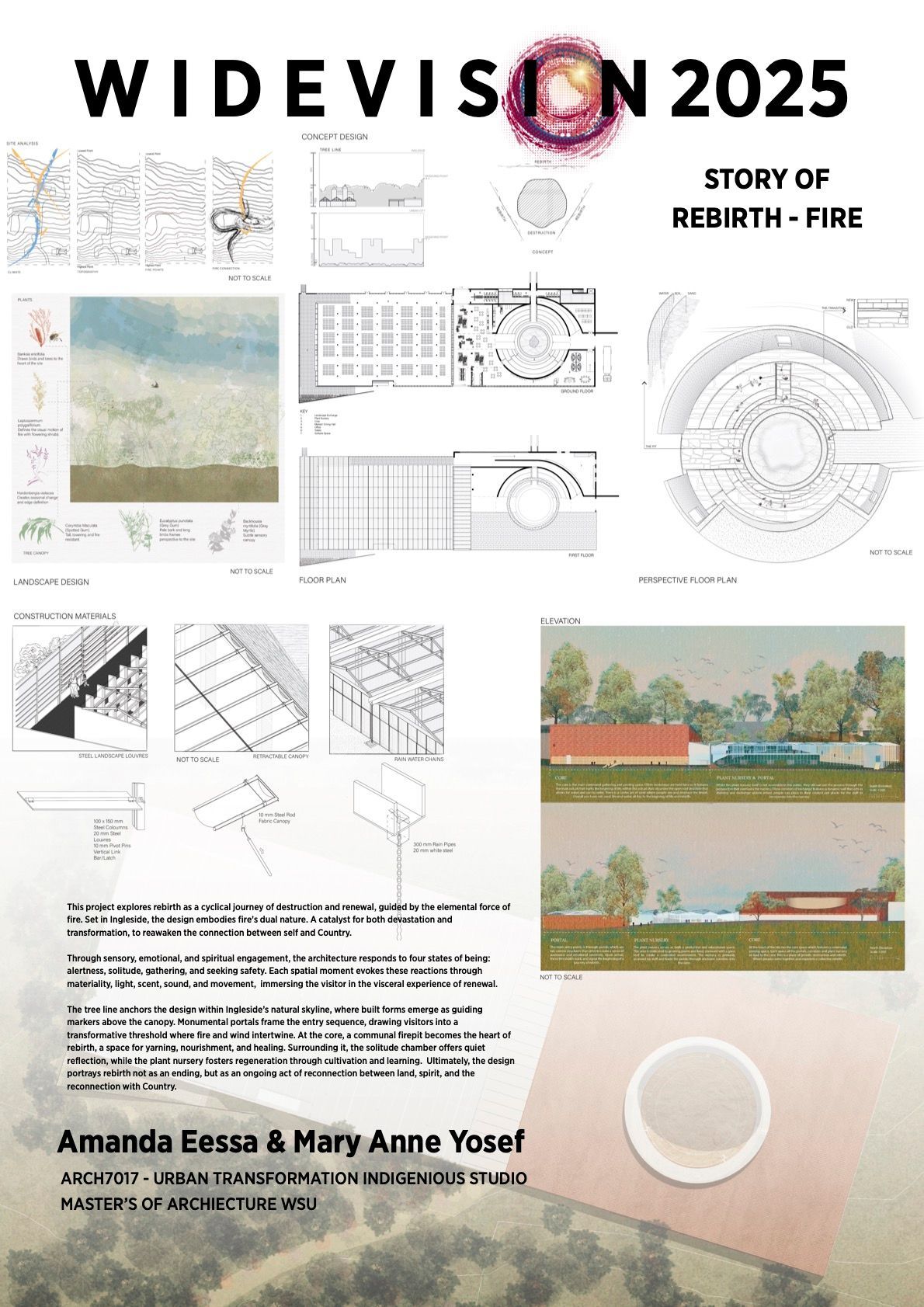


Mary Anne Yosef & Amanda Eessa are Master’s of Architecture students at Western Sydney University who share a deep passion for shaping meaningful and imaginative built environments. Mary Anne’s fascination lies in heritage, narrative, and the poetic “spectacle” of architecture. Amanda’s interests centre on masterplanning, design, and building a better future for Western Sydney. Together, they explore how architecture can bridge belief, culture, and place, viewing the discipline as a freedom to learn, to create, and to reimagine the world through human experience and collective storytelling. This project is a spatial narrative exploring fire as both destroyer and creator, a poetic and scientific symbol of rebirth. Fire, in its complexity, becomes architecture: it burns, cleanses, and renews, guiding the visitor through transformation. At the heart of the design lies the Core, a gathering space where kin connect through yarning, cooking, and sharing. The double-height dome roof opens to the sky with a circular cut-out, allowing rain to fall through sculpted spouts that feed the soil. Beneath, a firepit glows at night, its ashes later used to nourish new plant growth. The warmth of the floor and geothermal heating evoke intimacy, while suspended hangers and seating create a balance between ritual and function. The Portals act as spatial ignitions, towering, narrow thresholds rising through the treeline, where wind and scent draw visitors inward. The journey begins in alertness: smoke, projection, sound, and shifting topography awaken the senses. These entries align with prevailing wind paths, transforming the natural energy of the site into spatial choreography. Within the Solitude chamber, sound reverberates under a low, curved ceiling. Here, silence becomes sacred, echoing the spiritual stillness that follows destruction. It is a place to sit barefoot, feel the warmth of the ground, and listen to one’s own breath. Finally, the Tree Line frames the site, a natural horizon of shelter and mystery, where built forms subtly emerge and retreat. Together, these elements construct a sensory architecture of renewal: a landscape where destruction births creation, and fire becomes a vessel for reconnection to Country, to kin, and to self.


Mary Anne Yosef and Amanda Eesa