
Daniel Zalloua
Daniel is completing his Master of Architecture. He brings a sharp eye for detail and a methodical design approach, merging creativity with practical construction knowledge. With a background in the commercial design and build sector, Daniel has worked both on-site and in studio environments. This dual experience has shaped his interest in multi-scale, mixed-use, and commercially driven architecture, enriching his design process with a grounded understanding of real-world building constraints. Known for his diligence and time management, his strong construction insight ensures that every concept is considered through both a design and delivery lens.

Daniel Zalloua

PROJECT OVERVIEW
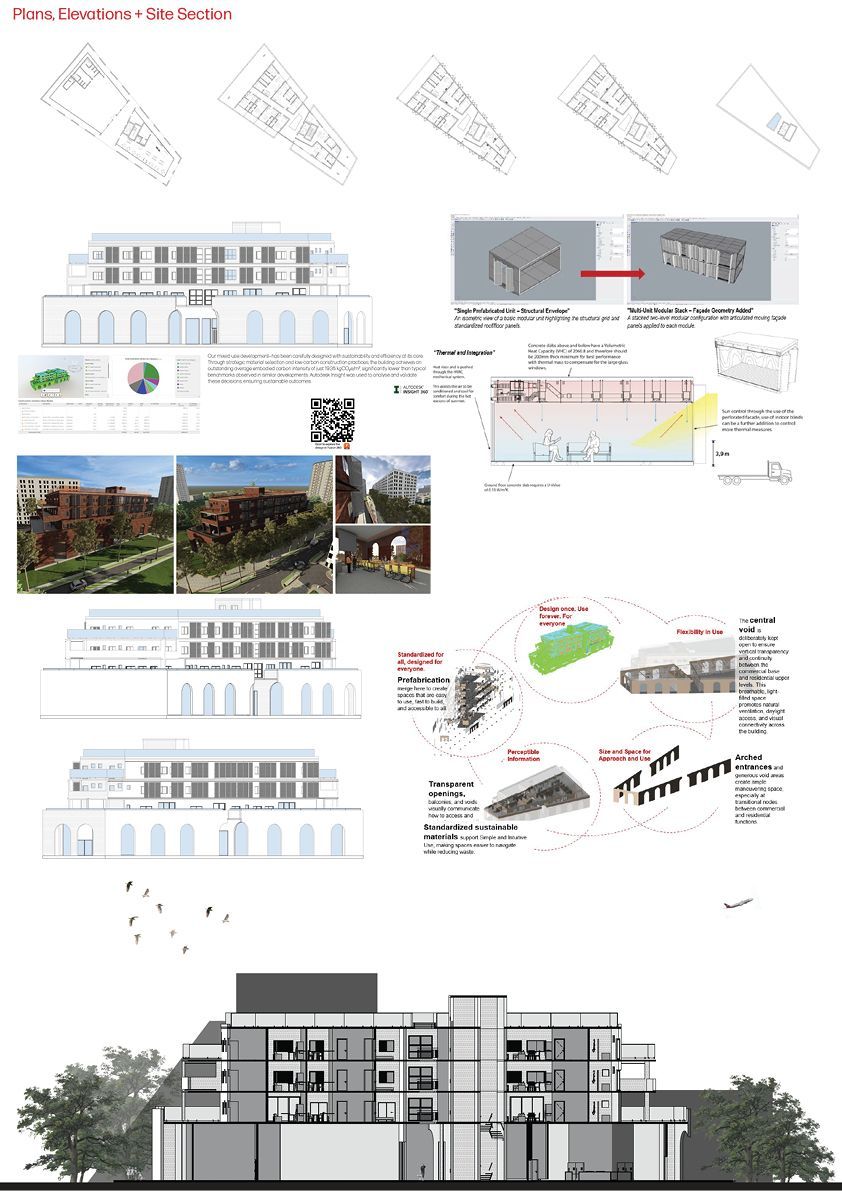


BARA-MOD is more than a response to housing needs—it is a platform for inclusive urban living, cultural grounding, technical innovation, and future-ready construction. The name blends BARA, an Indigenous word evoking life, water, and connection to Country, with MOD, short for modular. From void to volume, concept to assembly, BARA-MOD exemplifies how a coordinated, sustainable, and modular approach can deliver architecture that is efficient, equitable, and expressive. We envision an urban precinct that embodies the future of inclusive, sustainable and human-centred design. Our goal is to create a resilient built environment that goes beyond functionality to actively support the health, wellbeing and dignity of all individuals. Rooted in universal design principles, our precinct is adaptable to the diverse needs of its users—removing barriers and creating equitable spaces that are accessible to people of all abilities, ages and backgrounds. Every design decision, from circulation and signage to public interfaces and amenities, is guided by a deep commitment to inclusivity and belonging. Environmental responsibility is at the heart of our vision. By embracing modular construction, circular material flows, passive design and smart systems integration, the precinct minimises its ecological footprint while maximising efficiency, comfort and long-term sustainability. Our approach reflects a belief that regenerative urban development is not only possible—it is essential. We also see this space as a platform for innovation and knowledge-sharing. By integrating public, civic, and educational functions, our design fosters collaboration between disciplines, communities, and industries. Through flexible spaces for learning, making, health engagement, and cultural exchange, we support a dynamic urban life that evolves with the people it serves. Ultimately, our vision is to set a new benchmark for urban regeneration—transforming underutilised space into a vibrant, inclusive, and forward-thinking precinct that inspires hope, creativity, and connection for generations to come.


Daniel Zalloua